
• Nuevo
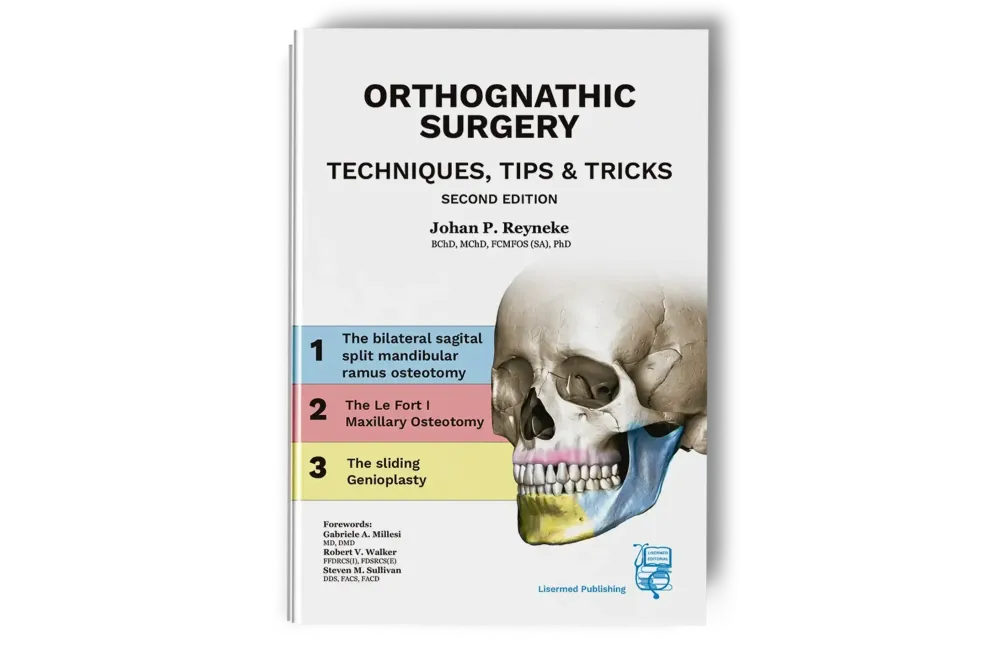
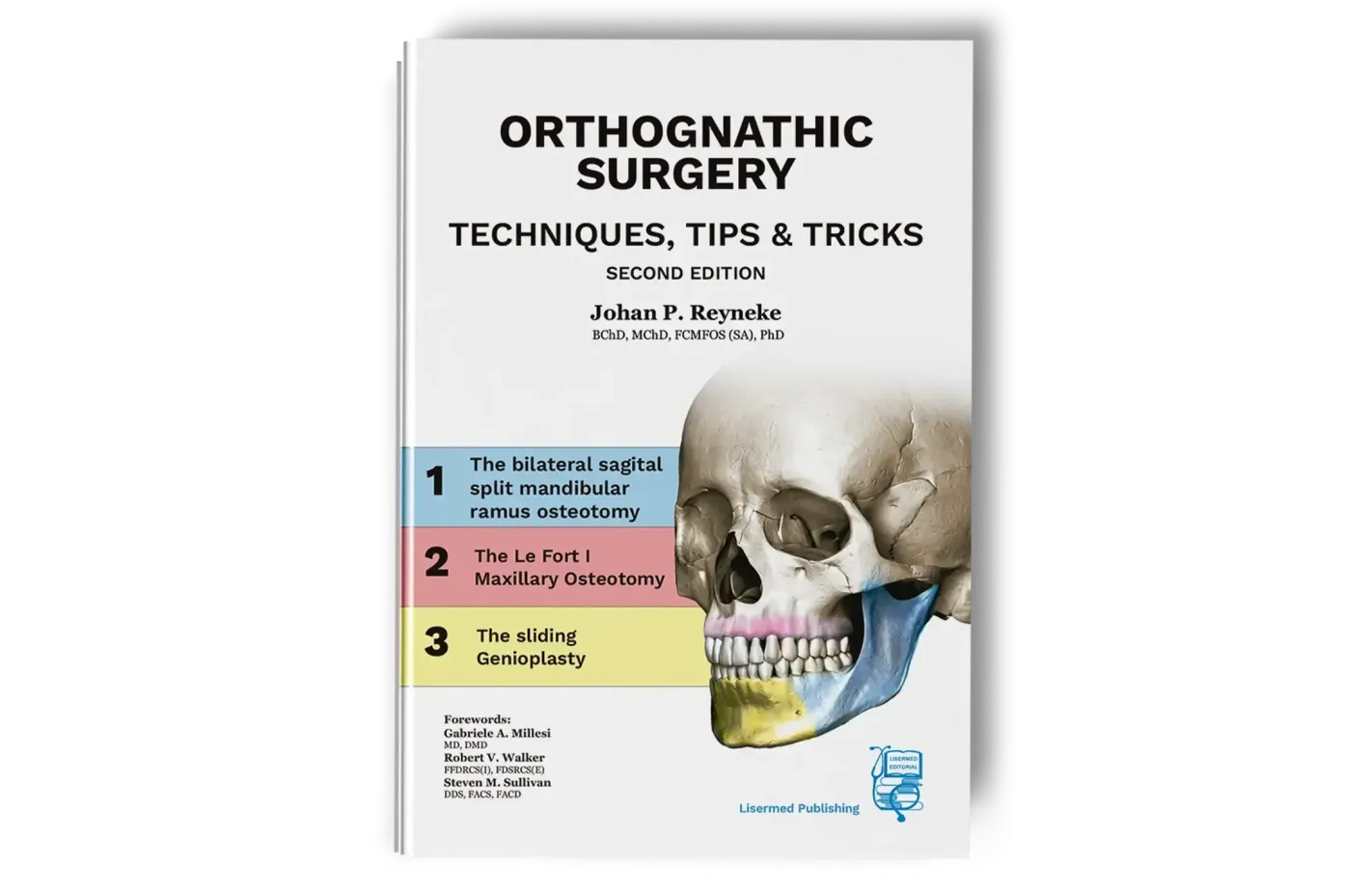
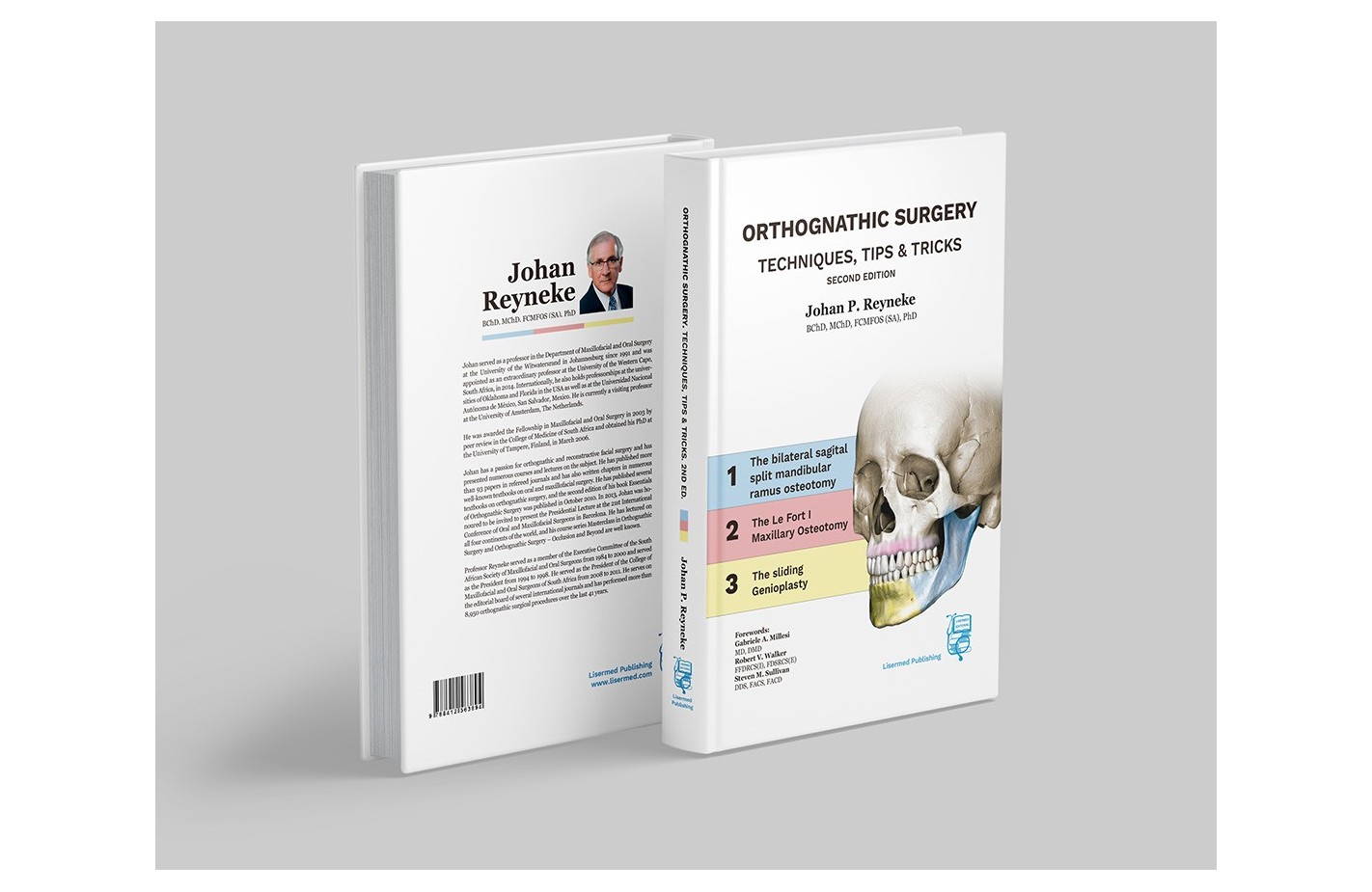
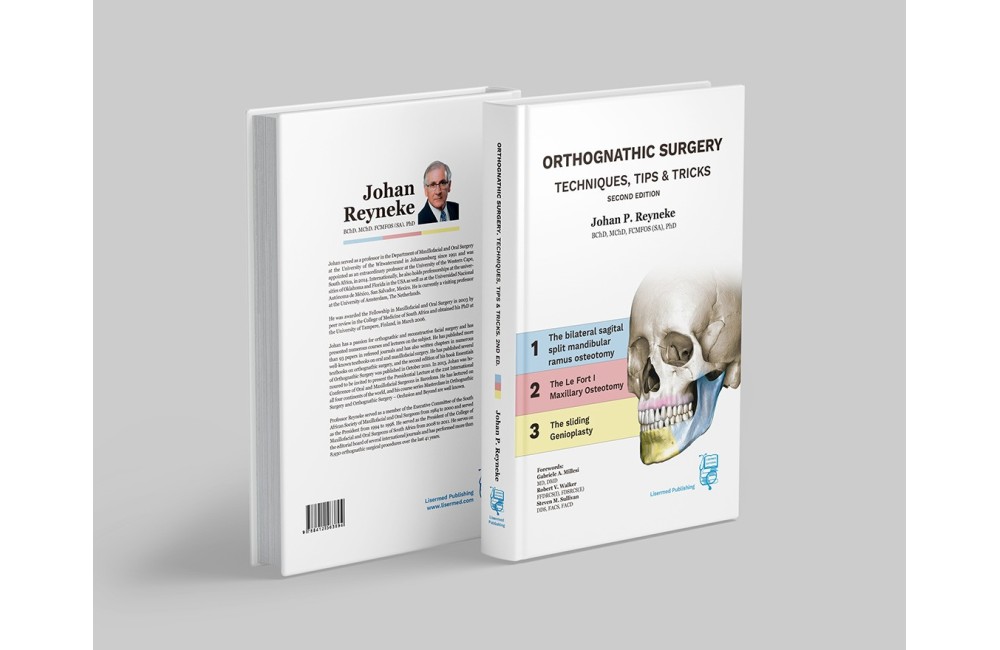
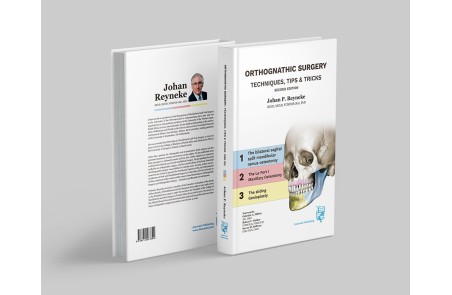
Orthognathic Surgery. Techniques, tips & tricks.

Orthognathic Surgery. Techniques, tips & tricks.

145,00 €
Impuestos incluidos

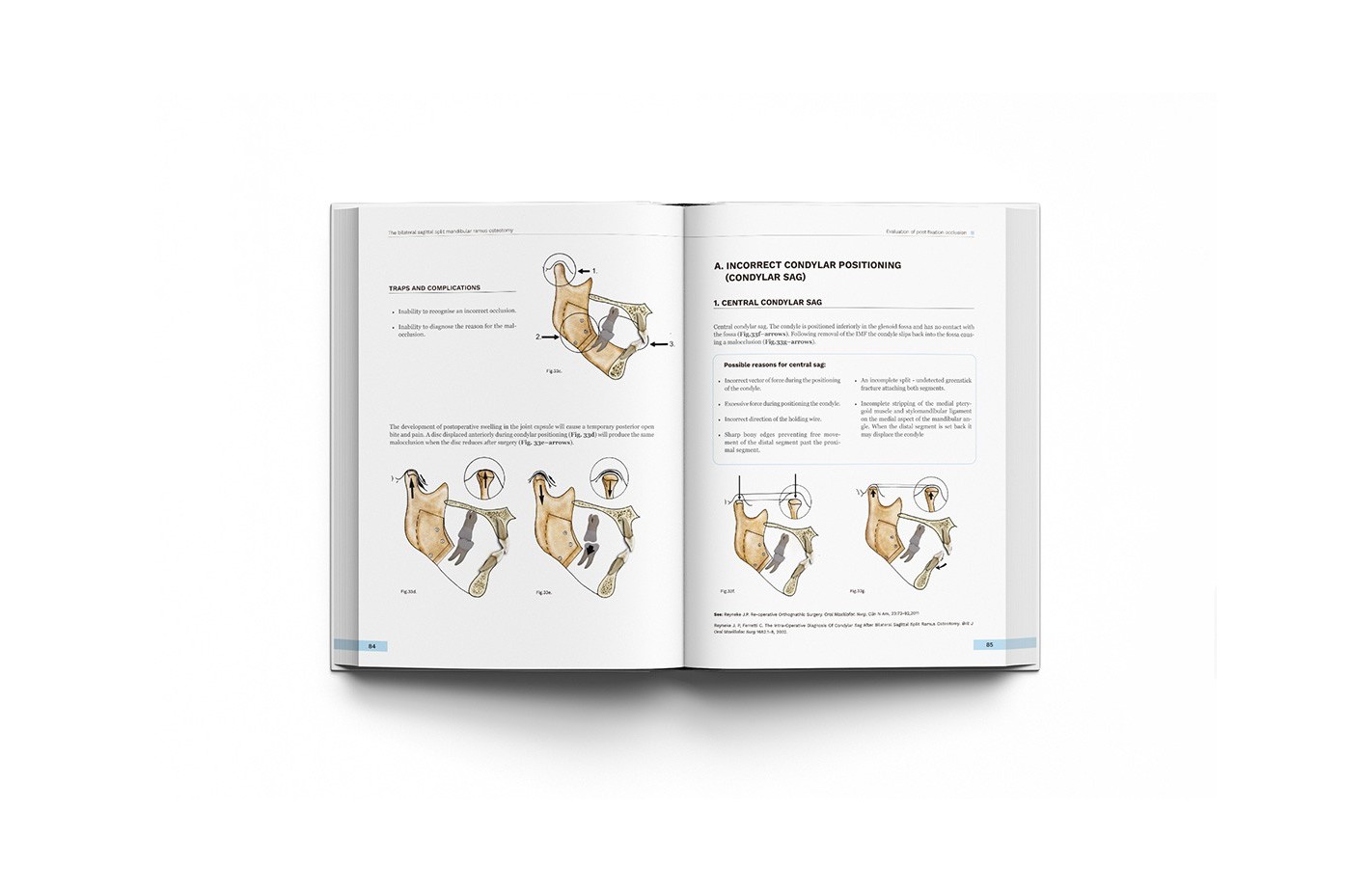
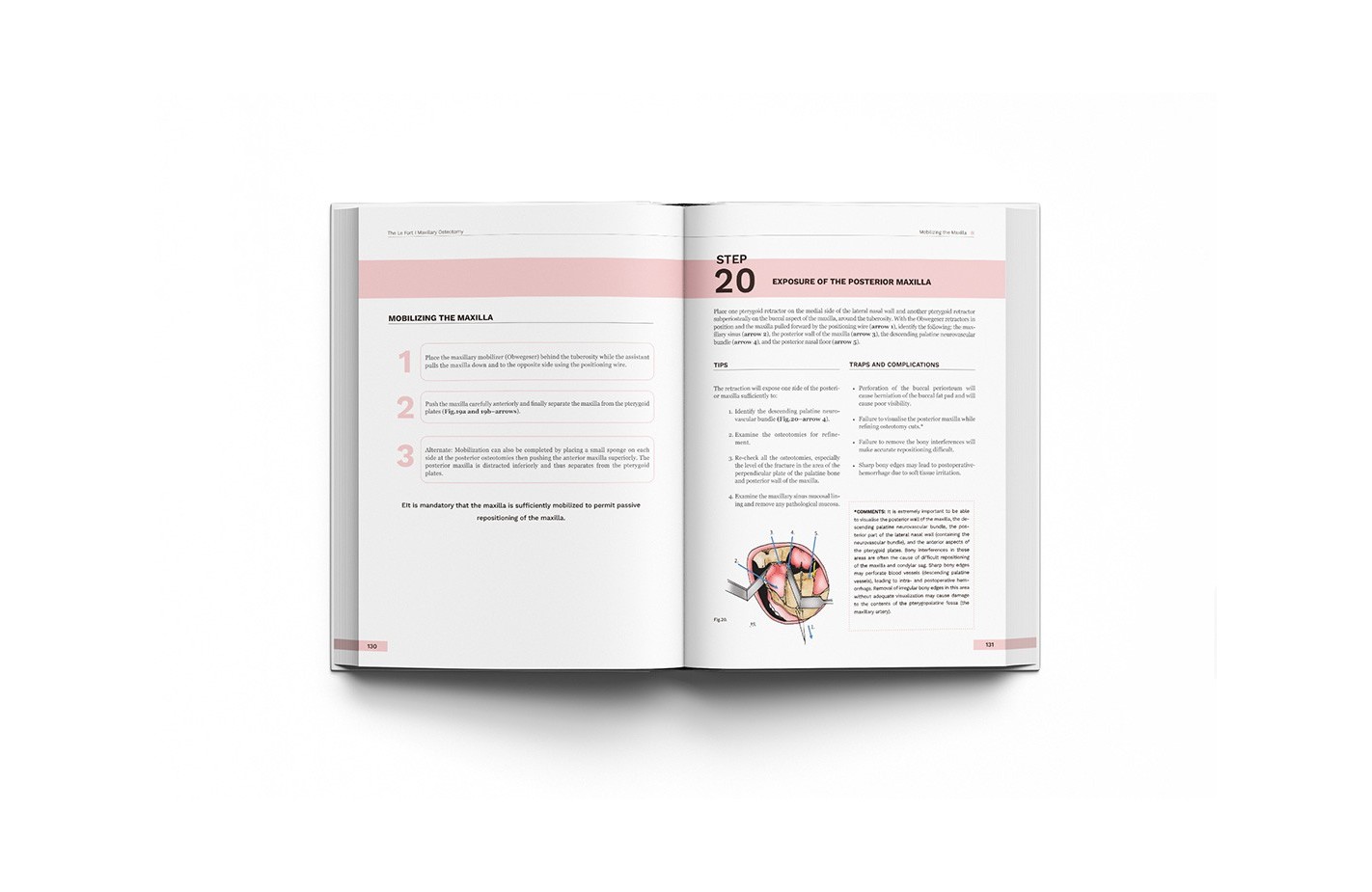
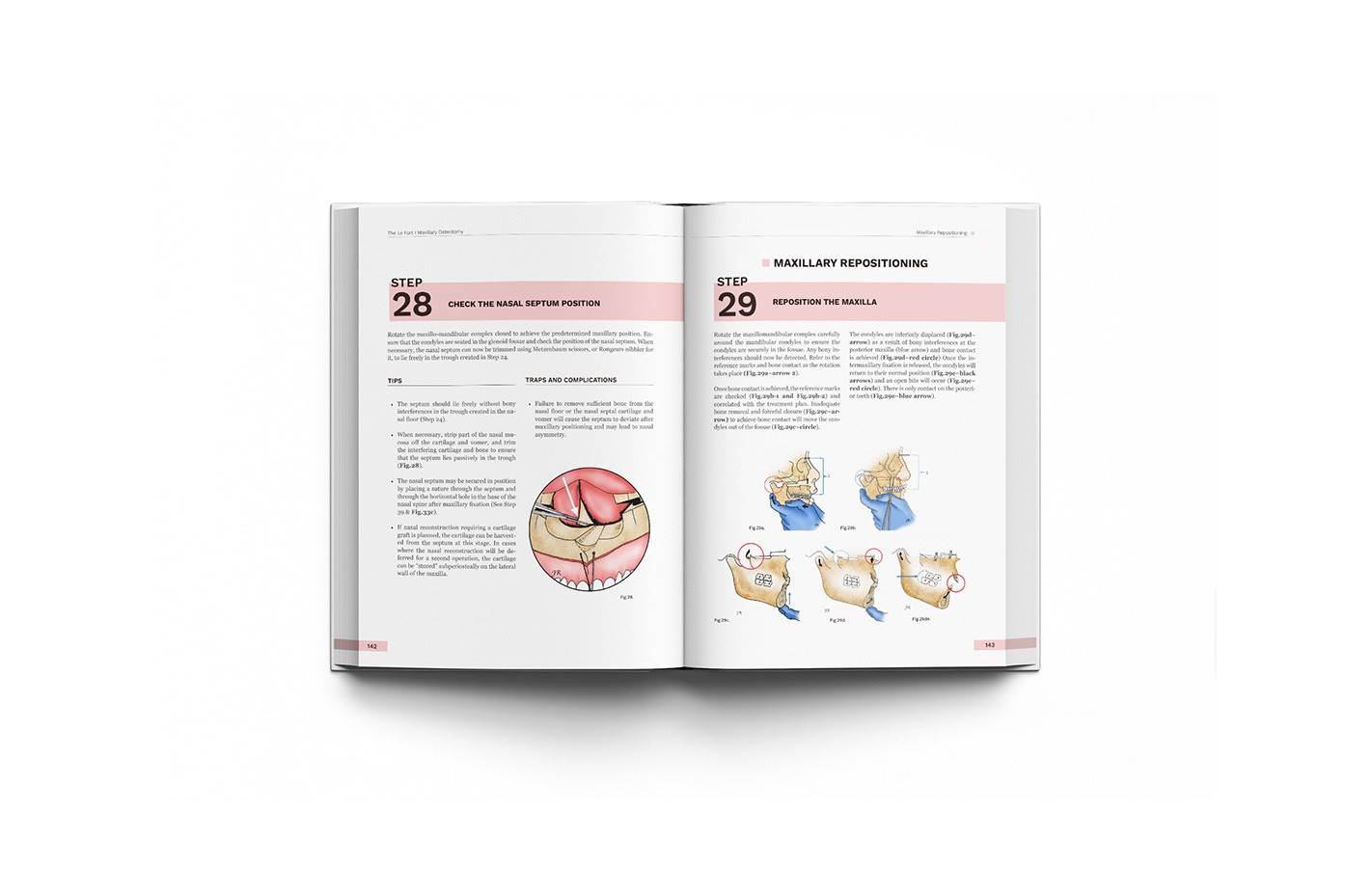
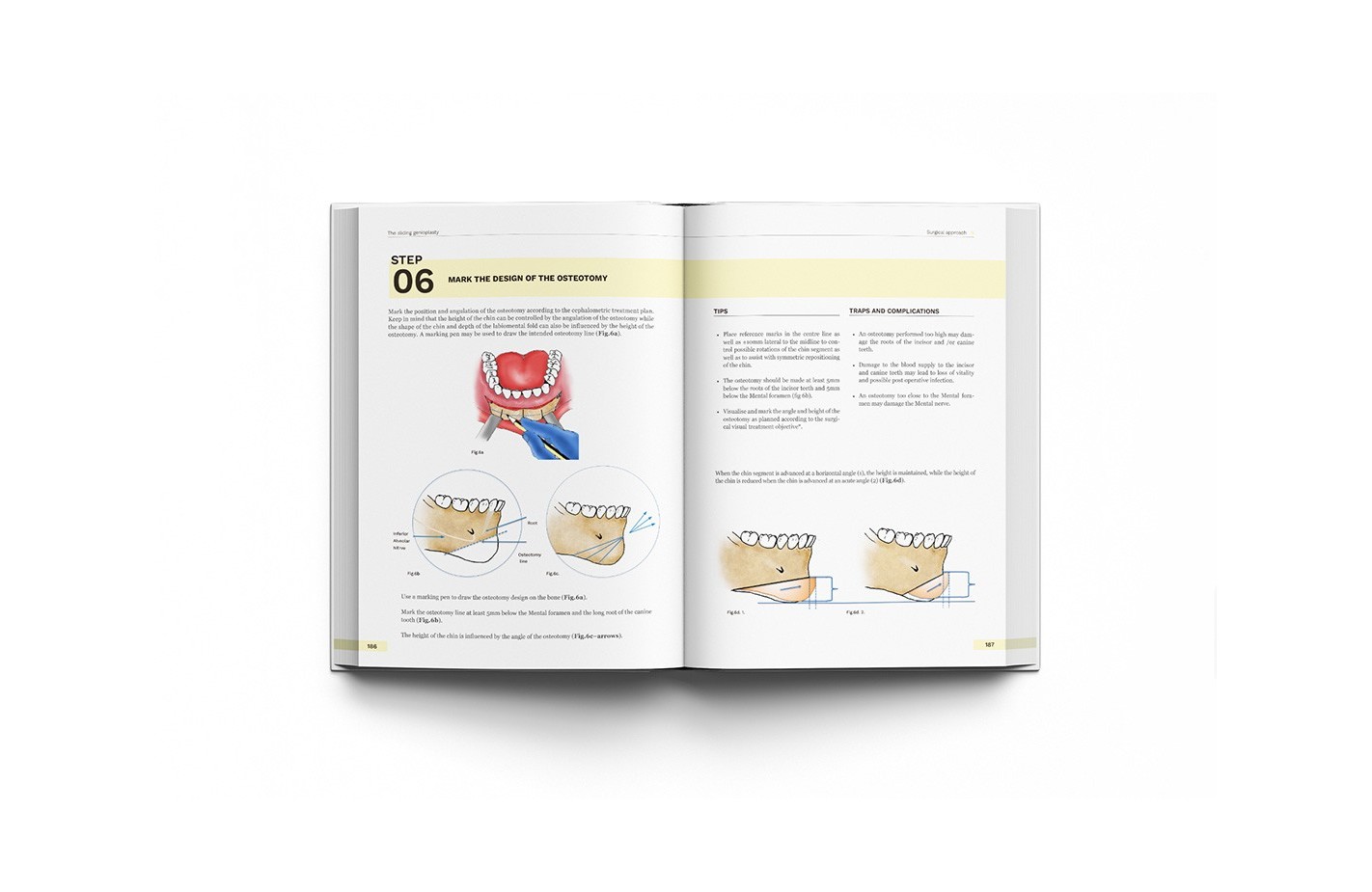
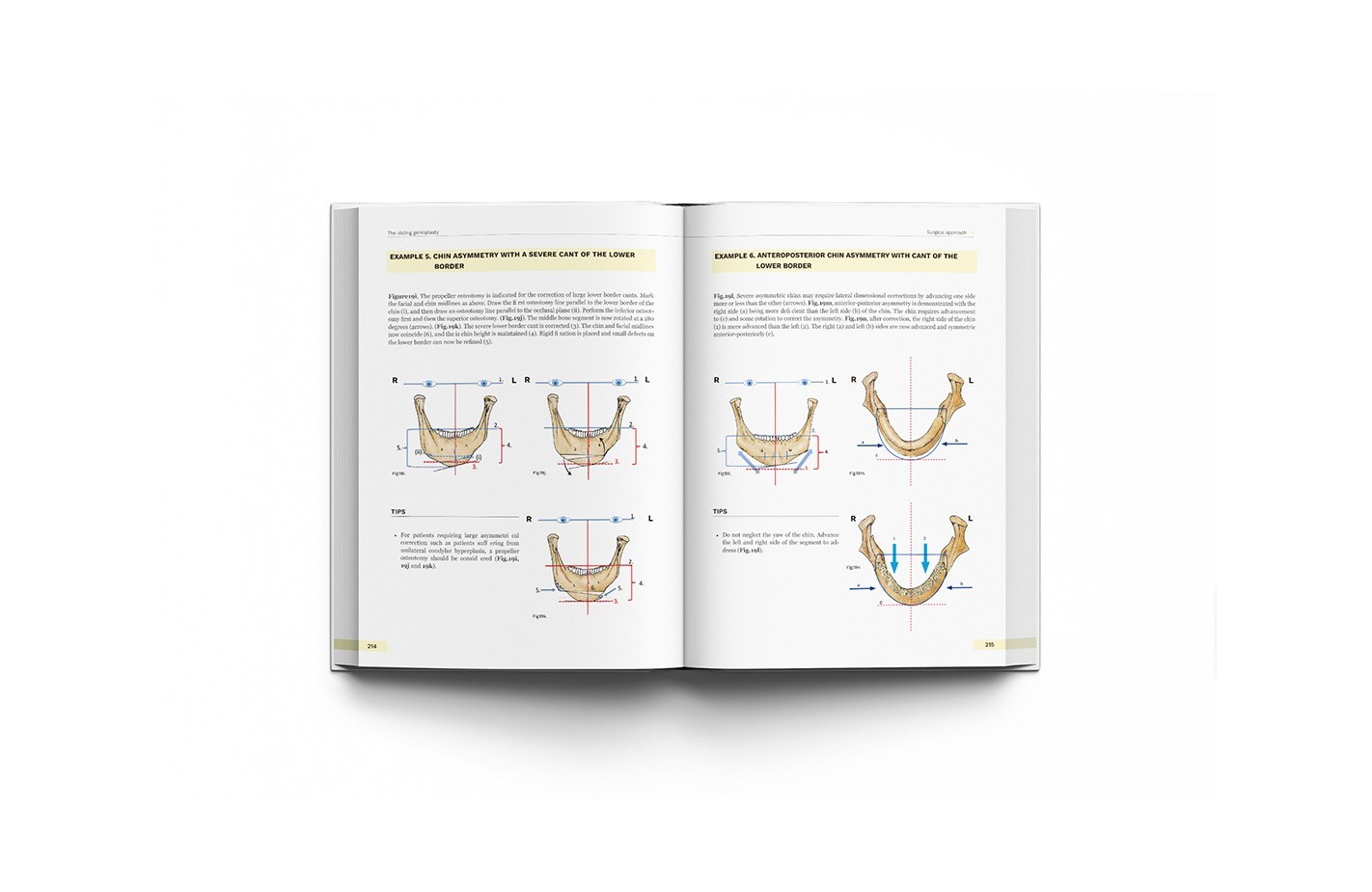
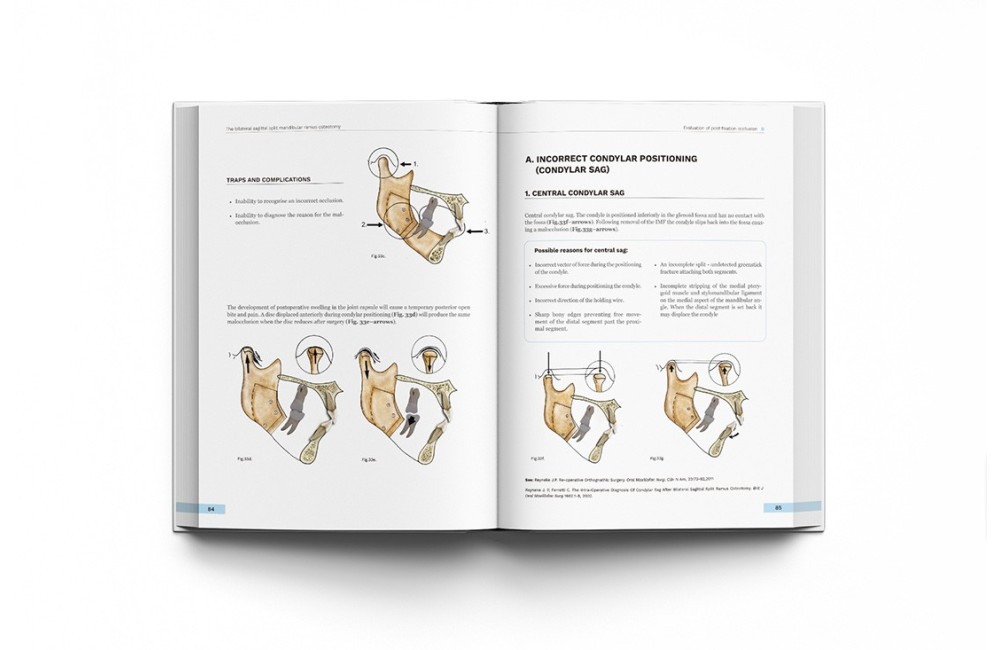
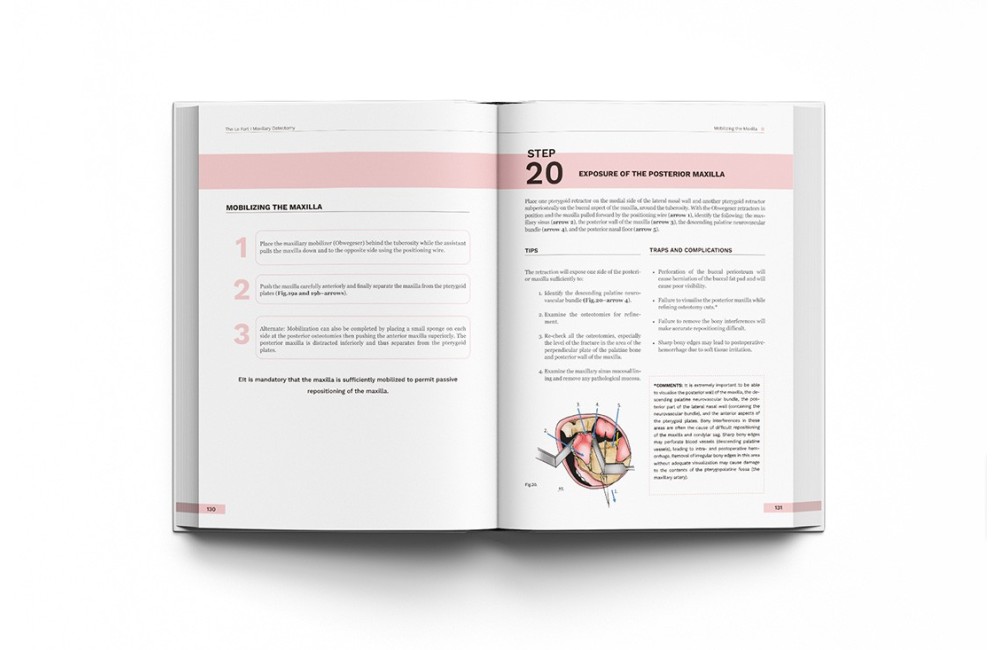
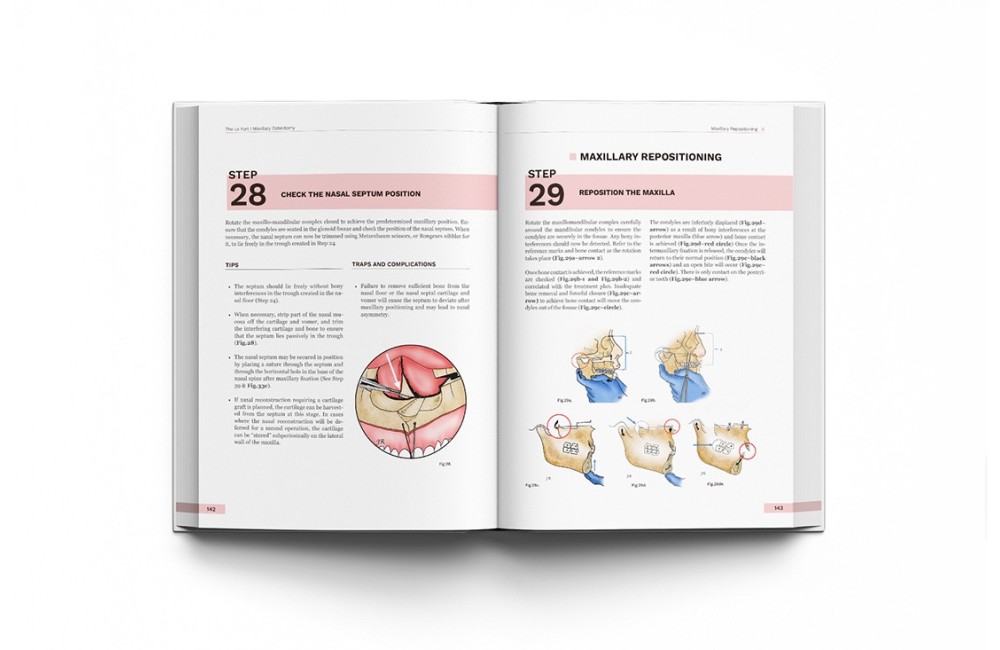
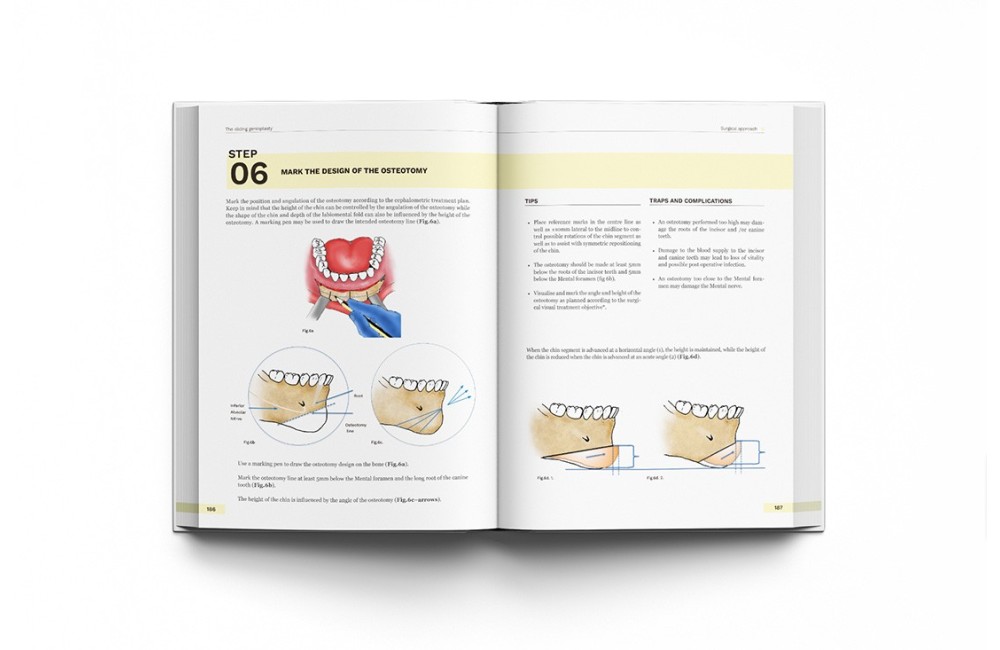
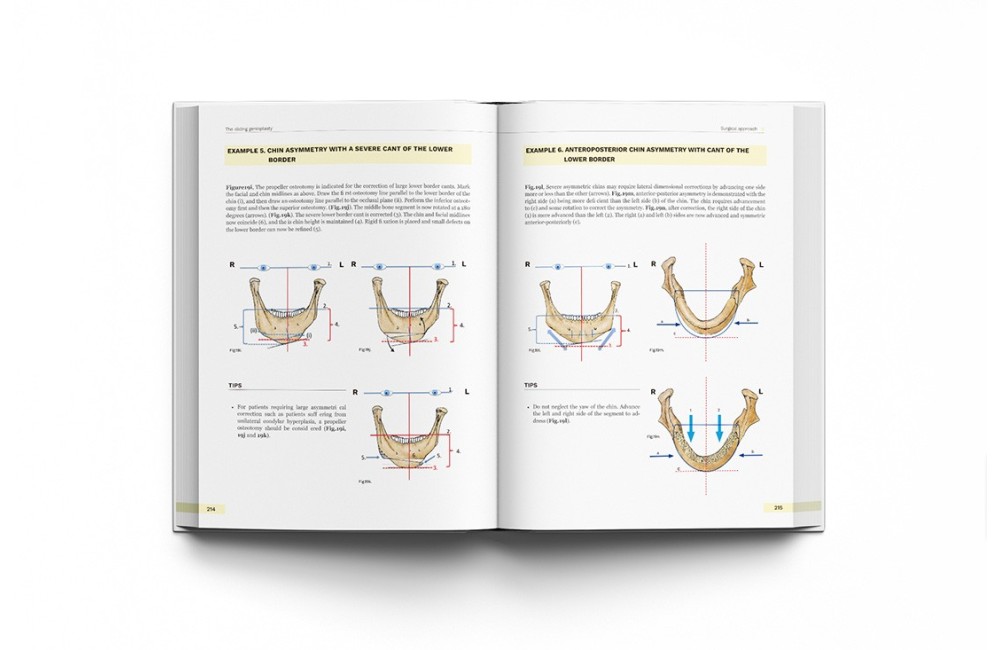
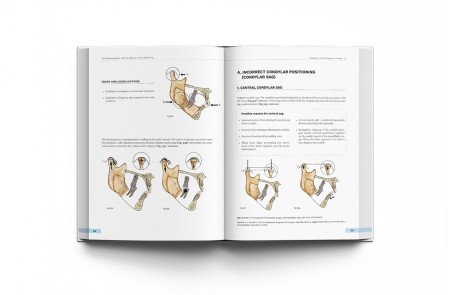
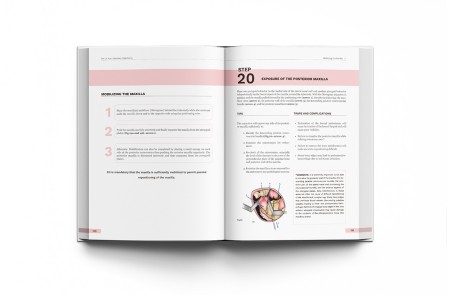
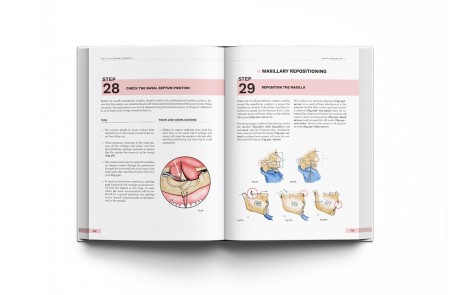
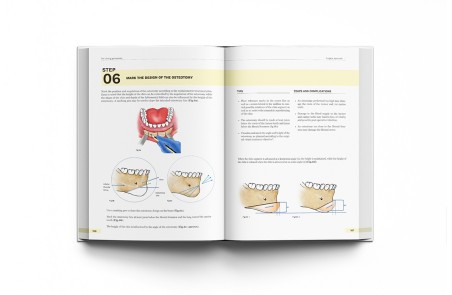
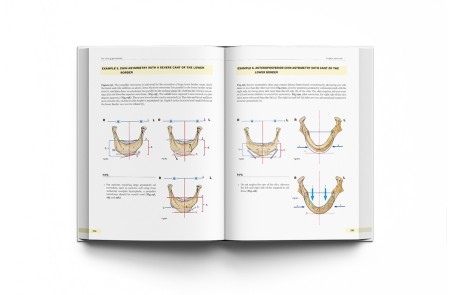
Master the art of mandibular sagittal ramus osteotomy with this essential manual by world-renowned expert Prof. Johan Reyneke. Drawing from thousands of successful cases, this guide transforms complex 3D data into a safe, clinical, step-by-step surgical maneuver.

Perfectly illustrated and thoroughly detailed, the manual goes beyond basic technique to provide "tricks of the trade" for avoiding and managing complications. Whether you are a trainee building a foundation or an experienced surgeon seeking to improve predictability and safety in dysgnathia corrections, this book offers a rare opportunity to learn directly from a global "guru" of orthognathic surgery.
 
Disciplina/s:
Cirugía oral y maxilofacial
Idioma:
Inglés
Encuadernación:
Tapa Dura
Edición:
1ª Edición
Año de publicación:
2025
Número de páginas:
225
Lisermed
979-13-990060-8-7
979-13-990060-8-7

Índice de contenidos

Table of Contents

  • PART 1: THE BILATERAL SAGITTAL SPLIT MANDIBULAR RAMUS OSTEOTOMY
    • SURGICAL APPROACH
      • Step 1. Infiltrate the area of the intendid soft tissue dissection with a vasoconstrictor
      • Step 2. Soft tissue incision
      • Step 3. Buccal subperiosteal dissection
      • Step 4. Superior subperiosteal dissection
      • Step 5. Medial subperiosteal dissection
      • Step 6. Identifi cation of the lingula 34
    • PERFORMING THE OSTEOTOMY
      • Step 7. Medial ramus osteotomy
      • Step 8. Vertical vertical ramus osteotomy
      • Step 9. Prepare for the vertical buccal osteotomy
      • Step 10. Buccal osteotomy of the mandibular body
      • Step 11. Drill the holes for the placement of a holding wire
      • Step 12. Drill a purchase hole for the condylar positioner* and place reference marks perpendicular to the vertical osteotomy line
    • SPLITTING THE RAMUS OF THE MANDIBLE
      • Step 13. Define the osteotomy cut with an osteotome
      • Splitting the mandible
      • Step 14. Starting the split
      • Step 15. Completion of the split
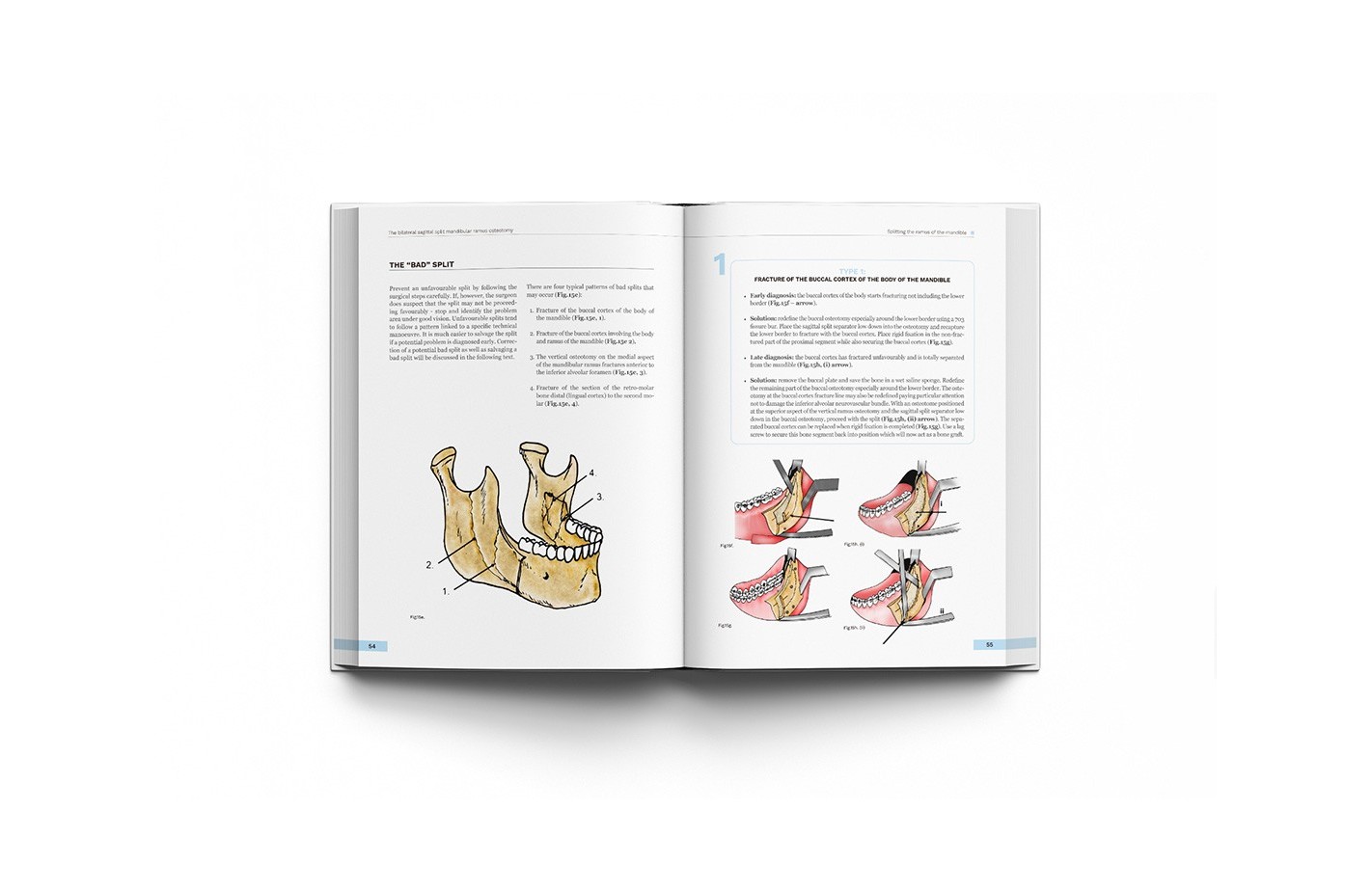
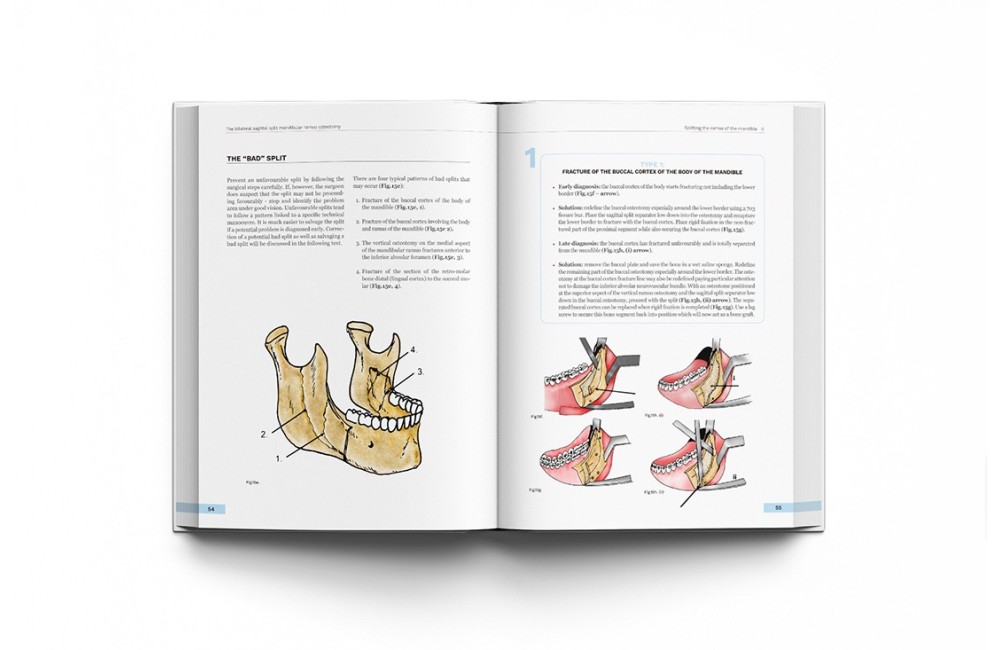
      • The bad split
        • 1. Fracture of the buccal cortex of the body of the mandible
        • 2. Fracture of the buccal cortex involving the body and ramus of the mandible, and continues to the coronoid process
        • 3. The vertical osteotomy on the medial aspect of the mandibular ramus fractures anterior to the inferior alveolar foramen
        • 4. Fracturing the segment of bone distal to the second molar
      • Step 16. Stripping the pterygo-masseteric sling
      • Step 17. Stripping the medial pterygoid muscle and stylomandibular ligament for setback procedures
      • Step 18. Removal of impacted third molars
    • PREPARATION FOR REPOSITIONING THE DISTAL SEGMENT
      • Step 19. Contour contact areas of the bone segments
      • Step 20. Placement of a holding wire (018”)
      • Step 21. Note the position of the inferior alveolar neurovascular bundle
      • Step 22. Note the position of the third molar tooth (socket)
      • Step 23. Lavage
      • Step 24. Splitting the opposite side
      • Step 25. Mobilize the distal segment
      • Step 26. Selective odontoplasty and placement of a intermaxillary fixation
      • Step 27. Removal of bone for mandibular setback procedures
    • PROXIMAL SEGMENT REPOSITIONING
      • Step 28. Condylar positioning
    • PLACEMENT OF RIGID FIXATION
      • Step 29. Tightening the holding wire
      • Step 30. Placement of the trocar
      • Step 31. Placement of rigid fixation. Bicortical screws
      • Step 31. Plate fixation
      • Step 32. Remove the intermaxillary fi xation and check the occlusion
    • EVALUATION OF POST FIXATION OCCLUSION
      • Step 33. Intra operative diagnosis of an incorrect occlusion
      • A. Incorrect condylar positioning (condilar sag)
        • 1. Central condilar sag
          • 1.1. Bilateral central condylar sag
          • 1.2. Unilateral central condylar sag left side
          • 1.3. Unilateral condylar sag right side
        • 2. Peripheral condylar sag type I
        • 3. Peripheral condylar sag type II
          • 3.1. Bilateral peripheral condylar sag
          • 3.2. Unilateral peripheral condylar sag right
          • 3.3. Unilateral peripheral condylar sag left
      • B. Mobility at the osteotomy site
      • C. Movement of the occlusion during placement of rigid fixation
      • D. Maloclusion as a result of a poorly fitted final surgical splint
    • COMPLETE THE PROCEDURE
      • Step 5. Place intra- and extra-oral sutures
      • Step 6. Place elastics – 4Oz, 1/4”
      • Step 7. Place a pressure dressing 95
  • PART 2: THE LEFORT I MAXILLARY OSTEOTOMY
    • SURGICAL APPROACH
      • Step 1. Infi ltrate the soft tissue with a vasoconstrictor
      • Step 2. Mucosal incision
      • Step 3. Complete the soft tissue incision through the muscle and periosteum onto bone
      • Step 4. Subperiosteal dissection
      • Step 5. Intraoral reference marks & extraoral measurements
    • PERFORMING THE OSTEOTOMY
      • Step 6. Anterior buccal osteotomy
      • Step 7. Posterior buccal osteotomy
      • Step 8. Connect the anterior and posterior osteotomies
      • Step 9. Prepare for buttress wires
      • Step 10. Separate the tuberosity from the pterygoid plates
      • Step 11. Complete and refi ne the posterior maxillary osteotomy
      • Step 12. Lateral nasal wall osteotomy
      • Step 13. Complete the soft tissue incision on the contralateral side and perform the osteotomies on the opposite side
      • Step 14. Place a maxillary positioning wire
      • Step 15. Complete the subperiosteal nasal spine dissection
      • Step 16. Septal cartilage and vomer osteotomy
    • MAXILLARY DOWN FRACTURE
      • Step 17. Maxillary down fracture
    • FAILURE TO EFFECT MAXILLARY DOWN FRACTURE
      • Step 18. Redefine the osteotomies
      • Step 19. Mobilize the maxilla
      • Step 20. Exposure of the posterior maxilla
      • Step 21. Check the level of the fracture
      • Step 22. Trim the lateral nasal wall
      • Step 23. Refine the osteotomy at the posterior maxilla
    • REFINE THE OSTEOTOMY
      • Step 24. Reduce the palatal aspect (nasal floor) of the septum
      • Step 25. Contour the piriform rim
      • Step 26. Feed positioning wires through the drilled holes
    • INTERMAXILLARY FIXATION
      • Step 27. Place the splint and apply intermaxillary fixation
      • Step 28. Check the nasal septum position
    • MAXILLARY REPOSITIONING
      • Step 29. Reposition the maxilla
      • Step 30. Turbinectomy (if necessary)
      • Step 31. Nasal mucosa suturing
      • Step 32. Tighten the buttress wires
      • Step 33. Rigid fixation placement
    • SEGMENTAL MAXILLARY SURGERY
      • 1. Interdental osteotomies
      • 2. Nasal floor (palatal) osteotomy
      • 3. Closing interdental spaces
      • 4. Fixation and stabilization after segmental osteotomies
    • EVALUATE THE OCCLUSION
      • Step 34. Remove the intermaxillary fi xation and carefully check the occlusion
    • POST-PROCEDURAL SUTURING
      • Step 35. Place a cinch and nasal septum suture
      • Step 36. Submucosal suturing
      • Step 37. Mucosal suturing
    • PROCEDURE COMPLETION
      • Step 38. Placing elastics or intermaxillary fixation
      • Step 39. Apply a pressure dressing
      • Step 40. Extubation
  • PART 3: THE SLIDING GENIOPLASTY
    • SURGICAL APPROACH
      • Step 1. Infiltration of the soft tissue with a vasoconstrictor
      • Step 2. Mucosal incision
      • Step 3. Submucosal incision
      • Step 4. Mucoperiosteal dissection
      • Step 5. Mark reference points
      • Step 6. Mark the design of the osteotomy
    • PERFORMING THE OSTEOTOMY
      • Step 7. Osteotomy of the chin
    • MOBILIZING THE CHIN SEGMENT
      • Step 8. Mobilisation of the chin
      • Step 9. Engage the positioning wire
      • Step 10. Reduction of soft tissue tension
      • Step 11. Refinement of the osteotomy
    • ANTEROPOSTERIOR AUGMENTATION OF THE CHIN
      • Step 12. Repositioning the chin segment
    • INTERNAL RIGID FIXATION OF THE CHIN SEGMENT
      • Step 13. Tri-cortical fixation
      • Step 14. Placement of the tricortical screwss
    • BONE PLATE FIXATION
      • Step 15. Bone plate fixation as an alternative to screw fixation
    • ANTEROPOSTERIOR REDUCTION OF THE CHIN
      • Step 16. Antero-posterior reduction of chin prominence
    • VERTICAL AUGMENTATION OF THE CHIN
      • Step 17. Down graft of the chin segment
    • VERTICAL REDUCTION OF THE CHIN
      • Step 18. Vertical reduction of the chin
    • CORRECTION OF CHIN ASYMMETRY
      • Step 19. Correction of asymmetry of the chin
    • CORRECTION OF TRANSVERS CHIN DEFORMITIES
      • Step 20. Changing the width of the chin
        • 1. Altering the posterior dimension of the chin: Widening (increasing the posterior width / Narrowing (decreasing the posterior width
        • 2. Altering the anterior dimension of the chin: Widening (increasing the anterior dimension and squareness of the chin) / Narrowing (decreasing the anterior width and squareness of the chin)
    • COMPLETION OF THE PROCEDURE
      • Step 21. Suture the submucosal tissue
      • Step 22. Suture the mucosa
      • Step 23. Place a pressure dressing
No reviews

16 productos más en la misma categoría:

Producto añadido a la lista de deseos
Producto añadido para comparar.

Utilizamos cookies propias y de terceros para mejorar tu experiencia en nuestro sitio web, analizar el tráfico y mostrarte contenido personalizado. Al continuar navegando, aceptas el uso de cookies. Puedes cambiar la configuración o rechazar las cookies en cualquier momento en nuestra política de cookies.